Tag Archives: Countertop Installation

Tricks to Ensure That Your Kitchen Countertops Never Run Out of Style

Your kitchen countertops can easily become the focal point of the room. A strikingly veined marble or a bright stainless steel surface can set the tone for the rest of your kitchen design, complementing or contradicting the other features.

However, given the consistency of the trend cycle, it is easy to become enamored with a one-of-a-kind, eye-catching design only to find that it is out of style after a few months.

Of course, when designing your home, you never want to make choices that will be considered antiquated in years to come. Do you?

Remember that a high-quality kitchen countertop can quickly become one of the most expensive components of your home remodel, particularly if you choose a luxury, natural stone counter.

When you buy this stone, you don’t want it to run out of style and your kitchen looks outdated after a few months, do you? To ensure this doesn’t happen, here are valuable tips you should follow:

Don’t go for harsh contrasts

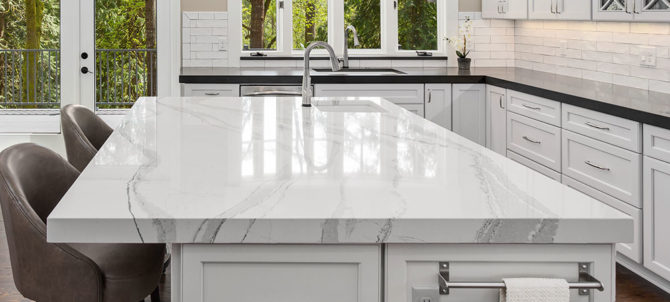
A dramatic countertop is definitely appealing, with its unexpected and one-of-a-kind flair. However, as is so often the case, the things that make the most statement are typically the first to go out of style, relegated to the ranks of old kitchen trends.

Right now, overly graphic veining and bold color contrasts are having a moment but they’ll lose their appeal faster than most people expect.

More dramatic, highly visible veining has undoubtedly become an increasingly popular style in kitchen design, valued for the sharp contrast it provides and the intricacy it adds to a design.

While this is the case, this ‘punchiness’ can rapidly become overwhelming, and you may wish you had chosen a more pared-back finish.

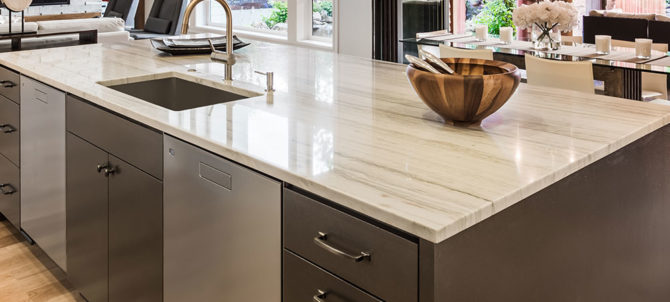
To create a kitchen that feels elevated for years to come, focus on natural materials in softer, tonal shades that seamlessly blend with the space rather than dominate it.

Avoid cheap materials

If you’re going on a comprehensive kitchen remodel, it doesn’t take long for prices to add up, leaving you with a seemingly insurmountable mountain of invoices and charges. As a result, it can be tempting to think that you can cut costs by choosing the cheapest alternative available.

You should note that your kitchen counter is not the place to try out dupes or alternatives. You should be clear of what you want and go for a high quality piece that will serve you for a long time.

Standout features that will see everyday wear and tear are always the ideal spots to invest some more money. A tatty worktop is the telltale indicator of a cheap kitchen, probably a laminated chipboard or something similar that just doesn’t stand wear and tear.

Instead of doing this, use a natural worktop material every time (marble, copper, stone, wood), as natural items age with more beauty, patina, and style and can look nice and always improve the more they are used.

Solid hardwood worktops are not now trendy; they fluctuate in popularity, but they are an excellent material that may appear extremely chic while also being less expensive than stone, marble, granite, or quartz.

Don’t go for tiles

Most people don’t like to pass up a tile trend, but your kitchen counter may not be the best place to experiment with a new, modern tile style. Wood and grout around a tiled surface can both stain easily, so you should avoid using these materials as a kitchen surface is likely to encounter spillages.

When choosing a kitchen island, functionality and usage are just as crucial as style. While a tiled counter may appear great at first, if the grout is stained with tea and coffee, the visual attractiveness fades quickly.

Instead of tiled countertops, go for natural stone—there are so many beautiful natural stones to choose from that will look good for a long time. Marble is a classic surface that comes in a variety of colors to complement any kitchen style or color plan.

If your budget allows it, go for it.

Avoid trend heavy designs

Countertops can easily become outdated if they rely too heavily on trends.

While it may be tempting to try to duplicate trends you see on social media and in the pages of your favorite publications, keep in mind that what you place in your own house has permanence that an Instagram post does not.

Whether it’s heavily speckled granite, bright white quartz with deep veining, or glossy finishes that reflect too much light, these materials can overwhelm a space rather than enhance it.

These eye-catching ideas can rapidly become out of date, and you’ll wish you had thought about how to build a timeless kitchen.

To be on the safe side, embrace materials that bring depth and warmth. Some of the materials to go with include: travertine, limestone, or even fluted stone details that add texture and a sense of craftsmanship that feels both current and timeless.

When it comes to countertops, materials with heavy speckling, overly polished finishes, or bold patterns that were once trendy can quickly make a kitchen feel outdated

Instead of doing this, go for materials that have a timeless appeal, such as natural stones like marble or soapstone with delicate veining, or honed finishes that offer warmth and texture. These alternatives have a traditional vibe while being modern.

Stay away from plastic laminate

If possible, avoid plastic laminate countertops and instead go for a more durable surface. This resin-soaked, cured paper is a popular low-cost countertop choice, valued for its affordability and ability to mimic more expensive materials.

However, laminate surfaces are not the most lasting option, as they are prone to scratches and can scorch when exposed to high temperatures.

One option you can go for are porcelain countertops as they are long-lasting and affordable alternative. Porcelain is a fabulous hardwearing and cost-effective alternative that can closely match the look and feel of natural stone.

It also has the benefit of being extremely hardwearing and easy to clean, making it perfect for countertop replacement Raleigh project.

Parting shot

As much as you should go for countertops that look good for a long time, don’t confuse picking a timeless countertop design with selecting a dull countertop.

This is because there are numerous creative ways to add a personal touch to your countertop while also assuring that it will not go out of style anytime soon.

One great way to add flair to your kitchen is with a creative countertop edge, or try the chunky countertop trend.

Common Countertop Mistakes and How to Avoid Them

soild surface countertops

Upgrading your countertops is an exciting way to improve the appearance and functionality of your kitchen or bathroom. However, making mistakes during the selection, installation, or maintenance process can cost you both time and money. Thankfully, knowing what to look for can help you make informed decisions and maximize your investment.

To help you out, here are some of the most common countertop blunders and how to avoid them:

Choosing the wrong countertop for your lifestyle

One of the most common mistakes people make is choosing a countertop material that does not fit their lifestyle or demands. While each material has its advantages and disadvantages, not all of them are appropriate for heavy use or specific settings.

Examples of poor material choices:

  • Installing marble countertops in a busy kitchen that is prone to spills and stains.
  • Using laminate in a damp bathroom, which cause warping over time.
  • Using wood surfaces in a kitchen with a lot of hot pots and pans.

To avoid this mistake, you need to evaluate your everyday habits and select a substance that can meet your requirements. For example:

Quartz is ideal for families who want a long-lasting, low-maintenance surface.

Granite: Ideal for individuals who like the distinctive beauty of natural stone and don’t mind the occasional sealing.

Laminate: A cost-effective solution for low-traffic areas.

If you aren’t sure about the right countertop to go for, get the input of a professional.

Failing to seal your countertops

Many natural stone countertops, including granite and marble, require frequent sealing to retain their beauty and functionality. Failure to seal your countertops can cause stains, water damage, and bacteria growth over time.

Common problems with unsealed countertops include:

  • Granite absorbs spills, resulting in lasting stains.
  • Acidic chemicals, such as citrus or vinegar, can cause etching in marble.
  • Stone countertops with unsealed edges and seams serve as breeding grounds for microorganisms.

To avoid making these mistakes, follow a regular sealing plan that is appropriate for your countertop material. Granite is normally sealed once a year, although marble may require sealing more regularly.

When you are doing the sealing, use a high-quality stone sealant and apply it according to the manufacturer’s directions.

Using abrasive products

Using abrasive products on your kitchen countertops can cause serious and irreparable damage. Abrasive products such as steel wool, scouring pads, and rough sponges have the potential to scrape and wear down the surface of different countertop materials.

Despite their longevity, materials like granite and marble can suffer from micro-abrasions as a result of their use, dulling their brilliant sheen with time.

Additionally, abrasive damage can render countertop manufacturers’ warranties null and void, leaving you, the homeowner, with no option for repairs or replacements. Instead of abrasive equipment, use soft cloths or non-abrasive sponges designed for gentle, regular cleaning.

For more stubborn stains, baking soda paste or specialized non-abrasive cleaners can successfully remove filth without jeopardizing the countertop’s integrity.

Additional preventative steps, such as using cutting boards for food preparation and cooking, can help to reduce the need for frequent and vigorous cleaning.

By avoiding abrasive tools and using gentler cleaning methods, homeowners can preserve the beauty and lifespan of their kitchen countertops, ensuring that they remain beautiful and usable for many years to come.

Proper care and maintenance are essential for sustaining the value and look of kitchen countertops.

Failing to maintain the countertops

Neglecting routine care of kitchen countertops can result in a wide range of issues that jeopardize both the beauty and performance of the counters. Daily use of these areas accumulates dirt, grime, and food particles over time, making removal difficult if not treated immediately.

Countertops that are not cleaned on a regular basis might harbor bacteria, posing health dangers, particularly in food preparation areas.

You should note that failing to reseal natural stone worktops like granite or marble can leave them exposed to discoloration and etching from acidic liquids like vinegar, wine, or citrus juices.

The sealant serves as a crucial protective barrier, keeping liquids from permeating the porous surface of the substance. When this barrier is not properly maintained, the countertop absorbs spills, resulting in permanent discoloration and damage, particularly after lengthy usage.

The edges and seams of laminate countertops are especially vulnerable to water damage if not checked and maintained on a regular basis. Excess moisture in the area might cause the laminate material to peel or swell, requiring unnecessary and costly repairs.

Similarly, hardwood countertops require frequent oiling to keep them from drying out and breaking due to wear and tear. Failure to do so may result in cracks and warping, reducing both aesthetic appeal and structural integrity.

Neglecting routine care not only reduces the aesthetic appeal of kitchen countertops but it can also result in serious health hazards, structural damage, and greater repair expenses over time.

Consistent cleaning and maintenance are vital to ensure the longevity and functionality of your kitchen surfaces while also serving as an aesthetic appeal to you as a homeowner.

Doing the installation by yourself

While DIY initiatives can save money initially, countertop installation necessitates precision and experience. Improper installation can result in uneven surfaces, obvious seams, or even damage to your new countertops.

There are a couple of risks that come with DIY installation. They include:

  • Improper measurements can result in countertops that do not fit properly.
  • Incorrect adhesive or support application, resulting in cracks or instability.
  • Damage to walls, cabinets, or plumbing during the installation process.

Hiring skilled granite countertop installers NC or any other experienced professionals will guarantee that your countertops are properly measured, produced, and installed. Professionals have the necessary tools and skills to complete difficult installations such as waterfall edges and integrated sinks.

To ensure that you are hiring the right people, you need to take your time. This calls for you to always do your due diligence before hiring. As a rule of thumb, schedule an interview with a number of experienced contractors, and from the interview, you should pick the right one for your project.

During the interviews look out for the years of experience, how they plan to execute your project and any other relevant details.

Granite Kitchen Countertops Maintenance Hacks

Granite kitchen countertops are a popular choice among many homeowners. If you want a gorgeous countertop material, granite is an excellent choice. In addition to its attractive appearance, granite is known for its outstanding durability and low maintenance requirements over time. When adequately sealed, the material is resistant to most stains and can tolerate high heat.

Granite has many advantages, but it also has certain disadvantages. Granite, like any other countertop material, will exhibit signs of wear and tear over time, especially if not properly maintained.

How do you take good care of your countertops to ensure that they last and look good for a long time? There are plenty of ways to go about it, with the common ones being:

Use the right cleaning products.

To clean your granite countertops without damaging them, avoid using the following products:

Household cleaners: Avoid using strong, acidic cleaners and abrasive materials. Over time, these chemicals and materials can wear away at the surface, making your countertops more stain-prone. Even while bleach is safe for granite, it is best to dilute it before using it to clean your counters.

Bathroom cleaners: Many bathroom or tile cleaners contain abrasives that damage and dull the granite surface.

Other household items: Cooking oils, manicure treatments, creams, and lotions can all stain your granite surface, even if the lid is on and the product is left on the counter for an extended period of time.

Most standard household cleaners are okay to use on granite, but choosing soft and non-abrasive choices can help keep your countertops clean and unspoiled. To give your granite countertops a glossy finish, put a few drops of cooking oil on the surface and gently rub with a soft cloth.

Keep in mind that granite requires periodic resealing. Daily use can wear down the sealant, resulting in a drab look. Regular upkeep and resealing will make your granite gleam.

After determining which materials are damaging to the surface of your countertops, use some of these basic best practices for cleaning granite countertops and preserving their brilliance and shine.

Exercise best countertop cleaning practices

Some of the best practices you should engage in include:

Wipe up spills right away: Basic maintenance, such as clearing up spills as soon as possible, is critical. Spills can damage the surface, potentially resulting in dark or dull patches.

Wipe up spills with warm water and mild dish soap. To prevent unattractive watermarks, wipe down any wetness on the countertop right away using a dry cloth. Depending on the overall state and dirtiness of the countertop, you may need to repeat the process several times.

Clean your surfaces on a regular basis: Following various daily, weekly, and monthly cleaning routines can improve the appearance and longevity of your countertop. Grab a sponge or dishcloth and some hot water at the end of each day—or sooner if your countertop is unusually filthy.

Spray your preferred DIY granite cleaner on any particularly nasty areas, then wipe away with a dry cloth. This not only keeps your counters clean, but it also disinfects and protects them.

Scrub persistent stains weekly: Clear off the countertop space to reach even the toughest areas. Spray the granite cleanser all over the surface, including the edges where crumbs tend to gather over time.

You can also use this chance to clean up any dust and dirt that has gathered in other areas of the kitchen, such as your appliances and containers.

Protect your granite countertops.

Granite is a relatively durable countertop material that can withstand heat and other kitchen conditions. However, because it is porous, liquids can discolor the surface after sitting for an extended period of time.

It can also become scratched if you use sharp items on it. Aside from washing the countertops frequently, there are a few more strategies to keep your worktops in the best form. These strategies include:

Coasters: Coasters keep cups, glasses, and other items from dripping condensation onto your granite surface. They also protect against scratches and other wear and tear.

Although granite is generally scratch-resistant, adding an extra layer of protection to your valuable countertop is not a bad idea.

Cutting boards: Granite can withstand chopping, cutting, and preparing food directly on its surface. However, granite is hard enough to quickly dull and damage kitchen utensils. Using a cutting board will help to keep your kitchen’s other operating parts in good condition.

Oil dishes: Place bottles, such as olive oils, that sit on the worktops on a decorative dish or plate. Because these containers tend to leak or drip, placing them on a dish reduces the likelihood of them ruining the counters.

Seal your countertops at the right time.

Using proper cleaning procedures and materials keeps your countertops in good condition, but even the most rigorous cleaning regimen cannot prevent damage caused by improper sealing.

Despite what some experts may claim, it is not always necessary to seal your granite countertops at the end of the year. The absorption rate of the stone, as well as the type and quality of any previous granite sealer you’ve used, all have a significant impact on how frequently you’ll need to reseal your countertops.

The effectiveness of the initial sealer, as well as whether aggressive cleaners or cleaning agents harmed the countertops, all have an impact. The best approach to assess whether the countertop needs to be resealed is to look for signs of liquid absorption. One clear symptom of a compromised surface is a darker color around the sink, indicating that water is seeping into the granite.

When it’s time to reseal, use a high-quality substance that will protect the surface for years to come, some of the lower-cost goods may wear down faster, necessitating more frequent replacement.

If you’re not sure if your kitchen countertops NC are sealed, start by dropping some water on the surface. The water will either bead, indicating that the countertop is sealed correctly, or soak into the stone, indicating the need for a new seal.

The beauty of sealing the countertops is that you don’t have to hire a professional—you can do it by yourself. The only thing you need to do is to ensure that you do it using high-quality products.

How Do I Choose a Countertop? Here is How to Go About It

Whether you’re remodeling or creating a new kitchen, you need new countertops in most cases. After removing the old countertops, there are numerous factors to consider when selecting the new countertops.

To help you out, here are factors to consider when looking for new countertop replacement units:

How you will be using the countertops

When deciding on the best countertops for your kitchen, you’ll undoubtedly consider how they look first. If you do not choose a material that can endure the daily use of the room, your money will be wasted. So ask yourself: how do you and your family utilize the kitchen?

Do you cook frequently? Do your counters show wear and tear from hosting parties or having youngsters at home? How long do you intend to live in your house?

You should answer these questions to make the right choice.

Purchasing multiple types of materials is one way to accommodate varied purposes for your kitchen. If you slice a lot of items while cooking, you might want to use butcher block on some of your counters so that you have a built-in cutting board. If you bake frequently, you will benefit from working with dough on a marble surface.

Mixing and matching kitchen countertop materials can also save you money. For example, if you have a large island, you may use a less expensive material here. Then, you can spend a little more cash on nearby counters that occupy fewer square feet.

The amount of maintenance you are willing to do

You should be honest and realistic about this one. Before you fall in love with the appearance of a material, understand the requirements for its upkeep. Here’s something to remember:

The butcher block is long-lasting but must be sealed biannually to prevent severe deterioration.

Porous materials such as marble, limestone, and granite require annual oiling and sealing.

Other materials, like quartz, only require a simple wipe-down without requiring any sealing.

This makes it easy to maintain your units.

If you don’t have much time to do the sealing and other maintenance tasks, you should avoid countertops that require much care as they will be too much of a bother.

Your budget

The cost of materials varies greatly, but with appropriate maintenance, good kitchen countertops can last long. You should choose your dream countertops and pick a variant within your budget.

For example, maybe you like the beauty of marble, but it’s out of your budget. Quartz has a similar look but is slightly less pricey. So, you should consider buying it.

Depending on the variations between your ideal countertops and the less expensive alternative, investing a little more money on something you’ll be using for many years may be worthwhile.

If you aren’t sure how much money you should spend on the countertops, a good rule of thumb is to pay between 15% and 30% of your money on kitchen countertops. If you spend less than 15%, the quality may be inferior to the other materials you use.

On the other hand, if your countertops cost more than 30%, you may be going overboard.

The amount of space that you have

Knowing how many linear feet of countertop space you have will allow you to estimate how much material you’ll need. Take this to several companies and compare it to their various alternatives and brands. This will give you a general estimate of how much it will cost you to purchase one material or brand over another.

The materials and colors that fit your home

And now to the question that often comes to mind: what will look best in my kitchen? Here’s a list of questions to help you decide which kitchen countertop material and color will complement your design:

  • Do you prefer a particular countertop color?
  • Do you expect your paint and hardware options to change?
  • How does your pick look against your current kitchen walls?
  • Are you satisfied with your present kitchen style or do you wish to change it up?

To leave your options open, choose a material with veins or splashes of color.

You should select a neutral color. Paint and accessories might vary over time, so having counters that match everything is a good idea.

If possible, take the samples home to ensure that you are buying the right countertop that looks great on your home. Looking at the material in your kitchen’s distinctive light and comparing it to the room’s colors, woods, decorations, and flooring will help you decide whether it suits your vision.

Countertop options to go with

Are you wondering what are your options when it comes to kitchen countertops? Well, there are many. The most popular ones include:

Concrete Countertops

Concrete countertops, which closely mimic genuine stone, remain popular among those seeking a unique countertop. Unlike the concrete countertops of the late 1980s, which were poured haphazardly over the cabinets, today’s fabricators provide pre-cast counters manufactured in a workshop and delivered—fully cured and finished—to your home.

Pre-cast concrete countertops are normally 1½ inches thick and come in slabs up to 10 feet long. Pigments are added to the concrete during mixing to create a range of hues.

After curing, the slabs are sharpened and sealed to avoid stains. Cracking is always an issue with concrete. Thus, fabricators frequently employ wire mesh, metal rebar, fiberglass, or stainless steel fibers to reinforce the counter.

Granite countertops

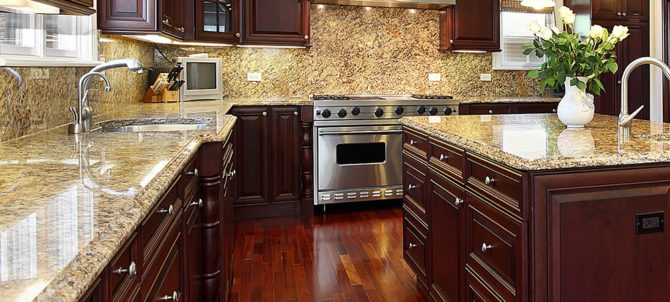
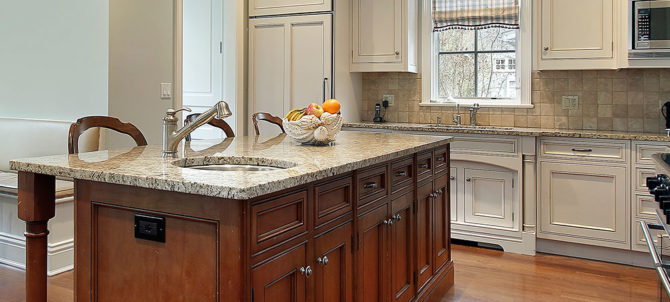
Granite is a popular material for kitchen countertops due to its durability and natural beauty. Each block of granite is unique, with different veining and color variations.

Some of the reasons you can consider granite kitchen countertops include:

  • Increase the value of a home.
  • They come in a variety of colors and patterns.
  • They are exceedingly durable and scratch-resistant.
  • Offer heat resistance.

Parting shot

These are some factors to consider when choosing kitchen countertops Raleigh for your next project. For the best outcome, ensure that you choose countertops that match the design of your home and are easy to maintain.

How to Avoid Stains on Quartz Countertops

Quartz countertops are popular among homeowners because they are durable, can tolerate high temperatures, and require little maintenance, making them ideal for busy kitchens and bathrooms.

The countertops comprise 90% powdered quartz with 8-10% resins, polymers, and pigments. They come in various hues and patterns to suit any design aesthetic.

But are quartz countertops stain-proof? While quartz is resistant to most stains, remember that no countertop material is immune.

Why do quartz countertops stain?

Quartz countertops are man-made surfaces of crushed quartz, resins, polymers, and colors. They are highly resistant to damage, although they can still stain if not properly cared for.

Quartz, like any other countertop, is prone to stains from red wine, coffee, tea, tomato sauce, juice, and other accidents if not cleaned immediately. However, unlike granite, staining does not develop because the countertop surface absorbs the staining liquid.

The staining occurs when the liquid combines with the resin, one of the critical components of quartz surfaces. Resins contribute to making quartz countertops non-porous, but they are also susceptible to damage from cleansers, heat, and chemicals.

What causes staining on quartz countertops?

Quartz countertops, despite being non-porous, are susceptible to stains under certain conditions. Some of the most common issues and causes of staining are:

Hard water problems: Those annoying mineral deposits from hard water can leave permanent markings. You can prevent this by promptly mopping up spills and considering a water softener for your home.

Food and beverage spills: Red wine, coffee, tea, and tomato-based sauces are all known contributors. You should blot spills promptly to prevent stains from settling in.

Oil and grease: Cooking with oil is essential, but splatters can leave stains. Wipe them up quickly to keep your countertops spotless.

Ink, cosmetics, and nail polish: If these ordinary items remain in place, they can leave stains. Any spills or mishaps should be cleaned up immediately.

Bleach, paint thinner, and super-strong cleansers are all examples of harsh chemicals. These can degrade the resins in quartz, increasing the likelihood of discoloration.

Extreme heat: Although quartz is heat-resistant, using trivets or hot pads to protect the surface from boiling pots and pans is highly recommended.

Improper cleaning: Avoid using abrasive scrubbers, bleach, and highly acidic or alkaline cleaners. This is because these can damage the resin and make discoloration more likely.

How to avoid quartz countertop stains

Prevention is usually better than cure, especially regarding your lovely quartz countertops. Thankfully, you can prevent the countertops from developing stains in several ways. These ways include:

  • Clean up the spills quickly with a soft cloth or sponge.
  • Cutting boards, trivets, and coasters are helpful beyond their cosmetic use. Use them at all times when using your countertops.
  • Avoid putting hot pots directly on the countertop surface.
  • Use a moderate dish soap and warm water (not hot) for routine cleaning.
  • Avoid bleach, acidic cleansers, and anything abrasive. These can cause harm to the surface of your counters.

Ways to remove stains from your quartz countertops

Stains are unavoidable, no matter how well you clean your countertops. If a stain appears on your quartz countertop, don’t panic. There are numerous removal methods, depending on the type and severity.

Most quartz stains are caused by liquid being on the surface for an extended period. Depending on what created them, here’s how to deal with those bothersome marks.

Removing everyday spills

Spritz some glass cleaner for light stains and gently scrub with a non-abrasive pad. For a natural stain-fighting solution, mix equal parts white vinegar and water. Dish soap and warm water often remove fresh stains, so use them.

Removing hard-to-remove spills

To remove the hard-to-remove spill stains, apply a powder cleaning product while aiming it at the stain and scrub with a nylon pad. Use a non-abrasive gel cleaner containing bleach, such as Soft Scrub.

While these treatments are highly effective and will remove stains from quartz, they will not repair a damaged resin.

Water stains are created by minerals like calcium or limescale left behind after water evaporates, resulting in chalky streaks that will not wash away.

Although bleach and other acidic cleaners can rapidly remove water stains, they can permanently harm quartz surfaces, and pH-neutral cleaners are ineffective.

Tricks to keep your quartz countertops clean

Wipe with mild dish soap: Harsh cleaning solutions are likely to react with the resin on the countertop surface, causing the quartz to discolor. Avoid cleaning products and use a dish, antibacterial, or hand soap. Mix the soap with water, and your quartz countertop will clean quickly.

Clean with lemon or vinegar: Combine water and lemon juice or white vinegar for an eco-friendly cleaning solution. These natural powerhouses are ideal for removing minor stains and grime, leaving your home sparkling clean without harmful chemicals.

Use the correct cloth: Make sure the fabric you’re using to wipe down your countertop isn’t abrasive since this could cause lasting harm to the quartz surface. A microfibre cloth is ideal for cleaning quartz surfaces since it is highly absorbent and does not leave watermarks.

Wipe spills promptly: Always wipe up spills as soon as they occur. It is always a good idea to clean up spills as soon as they occur.

Always use a cutting board when preparing meals to prevent scratches and cuts to the tabletop surface.

Place hot pots, pans, and plates on trivets or hot pads to protect your quartz countertop from heat damage.

Following these basic care guidelines, you can keep your quartz countertops looking gorgeous and immaculate for years.

Parting shot

These are some ways to prevent stains from developing on your quartz kitchen countertops NC. As mentioned, while the countertops are non-porous, you should take good care of them and remove any spills as soon as you notice them.

Wiping your countertops daily and paying attention to spills will meet its fundamental requirements. While this is the case, you will occasionally need to clean your countertop surface deep.

Spray a generous amount of non-abrasive cleaning onto the surface and allow it to sit for 10 minutes before wiping it away with a soft cloth.

Things You Should Know When Installing Marble Countertops

Marble is known for its high-end and luxurious appeal. If you are thinking about installing marble countertops, there are several things you should know. These things include:

There are many types of marble

Marble tends to be softer and more porous than most other countertop materials. Due to this, marble will mar, etch, stain, and possibly chip over time. Even if you’re meticulous about wiping up spills, resealing, and caring for your countertops, most marble surfaces will show signs of wear.

The type of marble you select influences how obvious the inevitable patina is. Dark marbles like Nero Marquina might make certain stains less visible.

Many intricate veining with lots of movement and color variation (like Calacatta Viola) can also hide evidence of wear and allow your eyes to focus on the pattern rather than the patina, making them an excellent choice for hardworking kitchens.

White marble, on the other hand, is amazing at concealing damage from acidic liquids like lemon juice.

Acids cause faint etchings in marble, which are especially noticeable on dark slabs. If you know you’ll be agonizing over every new flaw, choosing a marble that will hide them as much as possible is wise.

Order the countertop material first.

One of the biggest mistakes people make when installing marble countertops is ordering everything else for the kitchen first.

It’s well known that purchasing a marble slab is a significant undertaking, and it can be tempting to begin choosing the rest of your finishes before finding the ideal slab.

While selecting your kitchen details first and counters second may appear to be the natural order of events, it can have unintended consequences.

Countertops often cost roughly 10% of a kitchen makeover budget and can be one of the more expensive materials.

Because marble is an expensive material, it makes more sense to choose your countertops first and then match your finishes to them rather than the other way around.

In contrast to paint, wood stains, and tiles, which come in various colors, real marble is limited to naturally occurring tints and veining.

Prioritizing your slab selection and then matching the rest of the finishes will not only ensure a consistent color palette and professional end product but will also help you avoid awkward difficulties during installation.

For example, ensure that any faucets’ threaded shanks are long enough to accommodate the thickness of the countertop. Let’s assume you choose a generous 1-inch slab mounted on a sheet of plywood. If your faucet’s shank threads are 1 1/3 inches long, you won’t be able to screw on the threaded washer that secures the faucet.

Be cautious with your measurements.

Before looking for a slab, you should measure your entire countertop space. The simplest way is to design a diagram and then record the dimensions. To get the square footage, multiply the length by the depth and divide by 144.

If you’re replacing an old countertop, you might be able to utilize the dimensions as a guide. Remember to measure from the wall, not where the tiles or backsplash meet the top of the existing counters.

If you’re building new cabinets, use the designs to calculate your total countertop area; just remember to include an overhang. The usual overhang for stone countertops is 1 1/2 inches.

Once you’ve determined how much stone you’ll require, you can begin getting quotes and looking at slabs. If you intend to cut and fit the counters yourself, you’ll need to go a step further when determining the measurements of your surfaces.

In addition to measuring the entire square footage, you’ll need to calculate any cut-outs for the sink and stove areas.

Professional installers use laser equipment with up to 1/16 inch accuracy to ensure a precise fit. Fabricators can also use digital measurements to cut counters that accommodate any faults in your walls or cabinets. If you want to take highly exact measurements of your surfaces, you can invest in a laser measure.

Always view the slabs in person before buying them

Once you’ve determined the type of marble you want and how much you need, you can begin phoning stone yards to see what’s in stock in your area. If you want a good deal, avoid big box stores, cut out the middlemen, and go straight to a local stone supplier or fabricator.

While orders can be placed over the phone or online, visiting the showroom or Stone Yard in person is always best.

No two marble slabs are alike, so seeing what you’re buying is critical before committing. Colors and veining can differ significantly from photographs found online.

Small sample sizes are also not a reliable indicator. Purchasing an entire slab of marble based on the appearance of a 4-inch by 8-inch sample is equivalent to buying an expensive piece of art based on a single little corner. You wouldn’t do it, would you?

By seeing your slab in person, you can ensure it is precisely what you purchased. If a fabricator cuts the stone, you can choose which sections of the counter originate from which areas of the slabs. For example, if you like a particularly striking piece of veining, place it on your island rather than near the sink, where some of it may be sliced away.

Remove old fixtures first.

Another step you must complete before having those beautiful new worktops put in is to remove anything that will be replaced during the remodel. Remove the old tiles and clean the back wall if the backsplash is being replaced. If you’re removing the old countertop, thoroughly clean off any residue.

Remember that untidy areas of residual adhesive can make it challenging to apply a new coat of silicone. Irregularities in your cabinets’ top surfaces can also cause torsion points, putting strain on your newly fitted countertop.

To remove tenacious adhesive residue, use a wire brush attached to a drill or an abrasive pad. After you’ve removed most of the residue, wipe the tops of the cabinets and any supports or other locations where the new countertop replacement NC  will be installed.
How Do You Keep Granite Countertops Smooth and Shiny?

When you install granite countertops, you want them to retain their smooth and shiny look for as long as possible, right? The cool thing is that it’s possible. Some of the things you need to do include:

Protect your countertops from damage

The easiest way to keep your granite countertops in good condition is to protect them from spills, stains, and scratches.

The kitchen can be dirty, so it’s critical to take precautions to safeguard it. Some of the basic techniques to protect your granite kitchen surfaces include:

  • Clean spills immediately.
  • Use coasters
  • Cut veggies and other foods on cutting boards.
  • Avoid placing hot pots and pans directly on your countertop surface.
  • Be cautious of impact damage around the edges.
  • Avoid standard household cleaning agents, which can cause etching.

To protect your granite countertops from frequent stains and impurities, have them polished and sealed. Before you even do this, you must first ensure that you properly clean them.

How to clean granite surfaces

Different granite composites may require special treatments, so check with experts before trying new products.

Regardless of how clean you want the surfaces to be, never use cleaning agents with ammonia, vinegar, or citrus on your granite surfaces.

This is because these acidic cleaners will degrade the finish on your new granite countertop. You should purchase a cleaner made exclusively to clean granite surfaces.

To clean your granite countertops, spritz or mist the cleaner over the entire surface and allow it to sit for a minute. Remember to verify the exact instructions for the cleaner you’re using. Then, clean the surface with a soft microfiber cloth until completely dry.

Get rid of stubborn stains.

If cleaning does not work, you may need a razor blade to remove stubborn stains. Use the blade to scrape off any filth or buildup on the countertop.

You should be cautious when using the blade so you don’t scratch the surface. Simply ensure that the entire edge of the blade is on the counter.

Once satisfied, rinse your sponge and remove the suds.

You may need to rinse your sponge, wring it out, and wipe up any remaining suds several times. Make sure there are no huge puddles or leftover suds on your counters.

To be on the safe side, wear gloves to protect your hands.

If you don’t have a razor blade, you can remove tough granite stains by making baking soda and water paste. Scrub the spot gently with the paste and a soft towel.

Remember to rinse it well.

Removing a difficult stain may take numerous attempts, so don’t be afraid to go over it a couple of times. For a stubborn stain, apply the paste to the area, cover it with plastic wrap, and tape it down the corners.

Let the paste sit until it dries, which can take several days. When it has dried, use a soft cloth to remove it, then rinse with warm water.

Polish the surfaces

Polishing your granite countertops is similar to cleaning them. However, this time, you will allow a polishing solution to sit for 3 to 4 minutes before cleaning it away.

Once you are done, rub the countertop with a soft cotton towel until no streaks are left. At the end, you should be left with dazzling granite countertops you can be proud of.

You can polish granite using dry or wet materials. There is no better method as both methods can be beneficial. When making your choice, consider the advantages and disadvantages of each. For example,

  • Dry granite polishing powder costs less than paste.
  • You can apply dry and wet powder, making it more versatile.
  • Wet polishing produces a lot of spray when used with power tools, so you should wear water-resistant gear to protect yourself.
  • When polishing the surfaces, use plastic sheeting to cover walls, furniture, and cupboards.
  • Wet polishing cools the pads, preventing them from getting too hot and wearing out faster than they should.
  • Wet polishing pads cost less than dry pads.

If you are unsure about the ideal polishing material, contact your countertop manufacturer. They will recommend the best material.

Seal your countertops

A properly sealed granite surface will slow the spread of stains.

Pour a small amount of water on your granite surfaces to tell whether your countertops are ready for sealing. If you detect it slowly seeping in or darkening the surface of your granite, it’s probably time to reseal.

If the water immediately beads up on the surface, it indicates that you do not need to seal your granite countertops just yet.

When evaluating your granite sealer, apply it to a less obvious location before applying it to the rest of the countertop.

When applying the sealer, you should work in tiny portions to avoid spraying the same area many times. After applying the sealant, wipe off the countertop surface with a soft cotton towel for 3 to 5 minutes until dry.

After that, your countertops should be ready to use.

Add shine to the surfaces.

To shine your granite, apply a small amount of cooking oil to a soft cleaning cloth and wipe it around the surface. Buff it carefully. This makes the counter a little more stain-resistant and gives it a glossy finish that you are looking for.

Parting shot

These are some of the things you should do to keep your granite kitchen countertops Durham smooth and shiny.

Remember that everything begins with how you use the countertops. You won’t have an easy time if you don’t take good care of the surfaces. As a rule of thumb, always use a coaster on the surfaces.

Stains are bound to happen regardless of how frequently you clean your countertops. To avoid this, make it a habit to seal the surfaces. You can seal the surfaces by yourself, but always ensure that you use high-quality sealing products.

Your Guide to White Kitchen Countertops

Have you always wanted white kitchen countertops? There are many options you can go with. They include:

White marble

Marble is the most expensive option for white kitchen countertops. This material has the advantage of being naturally cold to the touch (ideal for bakers and those who live in hot areas) and being the whitest natural stone available.

Despite being a hard surface, marble has one notable disadvantage: it is acid-resistant. Lemon juice and vinegar can scratch the surface, while coffee and wine can stain it permanently.

Because you are purchasing marble by the slab, you must consider how differences in veining will appear when installed. When buying the slab for the first time, it’s always wise to get in touch with a professional who will guide you on the right slab veining to go with.

When making the purchase, you should note that the price of the countertops varies based on the slabs’ size and the marble’s source.

This means that authentic Italian marbles such as Carrara, Calacatta, and Statuario attract high costs because they are both beautiful and durable. Lower-cost marble from other countries (such as China) can be beautiful, although it is “softer” than Italian types.

You can easily buy a cheap slab without knowing, making it another reason to always involve experienced contractors in your purchase.

Quartz

The majority of quartz countertops on the market are engineered quartz, which is a mineral blend with other materials added for strength. (This is frequently seen under the brand names Silestone and Caesarstone.)

Engineered quartz is more durable, stain-resistant, and often less expensive than genuine stone. Because it is a man-made material blend, it is available in a wider selection of colors, finishes, widths, and thicknesses than real stone slabs.

Silestone is cheaper than marble per square foot, and the prices vary depending on the options available in the market. If you want a marble-like counter, choose Silestone’s Calacatta Gold design.

Quartzite

Though they sound similar, quartzite is not the same as quartz. Quartzite is a quarried natural stone that comes in slabs; it is as strong as granite and has a comparable appearance to marble.

If you consider installing it, note that acidic foods and beverages, like marble, can etch the material. The beauty of it is that it’s cheaper than marble and quartz, and the prices vary depending on style and size.

Solid surface counters

These countertops are constructed of acrylic and can be designed to seem like anything from marble to stainless steel.

Corian is one of the most popular solid-surface countertop brands. Counters made of this material are seamless and rather sturdy; however, they are easily scratched.

They are also not as resistant to heat as other materials. However, the solution is quite simple: Use trivets and coasters instead.

Laminate

Laminate, made by bonding sheets to plywood or particleboard, is the most cost-effective option for white countertops. So, if you are operating on a budget, these are the best units to go for.

Laminate is available in almost every color or pattern, including marble lookalikes. Laminate, like solid-surface counters, should not be exposed to heat. Keep those coasters close to reach at all times.

Tips to keep your white countertops in top shape

For you to retain your white countertops looking great, you should take good care of them. Some of the things you should do include:

Clean them regularly

There is no way your countertops will look great if you don’t clean them regularly. Thankfully, it’s easy to keep them in good shape.

For the best experience, ensure that you use the right cleaning products. To do the cleaning, you need a soft cloth or sponge. Avoid using abrasive items that could scratch the surface.

You also need a basic combination of dish soap and warm water. This is usually sufficient for cleaning daily spills and messes.

Follow these routine cleaning steps to keep your countertops looking clean and appealing:

Clean your countertops daily by wiping them down with a soft cloth or sponge dampened with warm, soapy water.

Remove spills as soon as possible: The longer a spill lingers, the more likely it may stain. You should clean the spills immediately to avoid stains and potential damage.

Keep an eye out for stains.

As much as white countertops look great, they are prone to staining. To get rid of the stains, use a nonabrasive sponge or cloth: Scrub the soiled area gently with a moist sponge or cloth dipped in mild soap.

For harsher stains, mix equal parts water and white vinegar to make a solution, then apply it to the stain, let it soak for a few minutes, and then wash it away.

To prevent stains from coming about, use trivets for hot cookware and coasters for drinks.

You should make it a habit to clean spills as soon as possible. This way, you prevent them from settling for a long time, increasing the chances of developing stains.

Keep your surfaces residue-free

Follow these guidelines to keep your countertop residue-free:

Clean the cooking areas regularly. For the best outcome, wipe off the countertops surrounding cooking zones daily.

Avoid using strong chemicals or rough instruments: To avoid countertop damage, use mild cleaning procedures.

If you have ignored your countertops and now they have developed residues, consider the following steps when dealing with dried residue or grease:

Scrape the surface using a plastic scraper or spatula: Remove the residue using a nonabrasive tool, being careful not to scratch the countertop’s surface.

Use a glass cleaner or degreasing solution: Spray a glass cleaner or degreasing solution on the residue, let it sit for a few minutes, and then wipe it away with a soft cloth.

Parting shot

These are some of the options you have when you are looking to install white countertops. Regardless of whether you go with granite or marble countertops NC, you need to take good care of them to look good and last for a long time.

Can You Install Granite Countertops by Yourself?

Ideally, you should hire granite contractors to install the countertops for you. If you don’t have the money to hire a professional, don’t worry, as with precision and hard work, you can install the countertops by yourself. 

To help you out, here is how to go about the installation:  

Have the necessary tools

Before you choose a granite slab from your preferred home furnishing store, make a list of the installation tools you need for the project and put them in place.

The ones you need include a putty knife, caulking gun, circular saw, measuring tape, jig saw, level, granite dye, masking tape, seam stone, filler, and dry-cut segmented diamond blade.

You use the jig saw to cut out the sink hole (though you may need to hire a professional for this step), use the masking tape to protect the seam lines, the putty knife to mix the seam filler with a dye, and the diamond blade to cut and seam the slab.

You will need a 0.75-inch plywood to brace the top of the cabinet upon which you will install the slab.

Be ultra-cautious when taking the measurements.

Installing a granite slab without determining how much countertop space your kitchen requires is a recipe for disaster.

So, if your granite slab manufacturer refuses to send a specialist to your home to take measurements until you pay an additional fee, you go ahead and take the measurements by yourself. When taking the measurements, be cautious to ensure a flawless job.

For the best outcome, measure the length and width of the top of the counter, which should be done in inches. You should multiply the measured length by 25.5 inches to get the overhang.

The overhang is the legroom required to sit comfortably around the countertop while allowing movement around the kitchen. After multiplying the length of the counter’s top by 25.5 inches, divide the result by 144 to get square footage.

The amount of granite you need for the backsplash should be included in the calculation. This should, of course, be the same length and thickness as the countertop slab, but the height is different.

The backsplash height is typically 4 inches. To convert it to square footage, multiply 4 inches by 144.

Properly prepare the installation area.

Besides having the necessary installation tools, there are several other ways you need to be ready for the installation.

Start by removing the old countertop and plumbing fixtures, level the counter surface, and clear the space around the counter.

Clear the area surrounding the cabinet and remove the old countertop using a nail puller or a screwdriver, depending on how you fastened it. This should expose the counter’s surface for leveling. The purpose of leveling the exposed counter is to maintain stability and facilitate the installation of the new granite slab.

Use plywood and shims for leveling because this is the combination most typically utilized by specialists to obtain professional-level results.

After leveling, turn off the plumbing and uninstall it to avoid an installation disaster. Remember to remove the existing backsplash as well.

Cut the countertop slab with precision.

You can waste a lot of money if you don’t cut the stone as well as it should. To save money, cut a granite slab to fit and look nice after installation.

To ensure that this happens, cut the stone with extreme caution. You will even be better off if you can hire a professional to do it for you.

When doing it, protect yourself from dust by wearing goggles, earplugs, gloves, and respirators. Move all kitchen objects to a location where dust will not settle.

With that out of the way, use a ruler and a marker to create the arrangement of your countertop design. Using a pair of scissors, carefully cut out this layout and pattern.

Following in the footsteps of the Marble specialists, clamp the acquired granite slab with C-clamps and cut it into the pattern in the cardboard using a saw.

Attach the cardboard layout to the granite slab and carefully retrace the design onto the slab to achieve this perfectly.

Sharpen your saw blade and begin cutting the slab along the pattern. You’ll experience heat and pressure growing as you cut.

Control this by having someone on standby to spray water on the granite as you slice it. Also, keep your eyes on the saw while you cut to avoid injury, and remember to take breaks at regular intervals to evaluate your progress.

After cutting, use an angular grinder to smooth the slab’s edges.

Properly seal the seams.

Improperly sealing the joints of your granite countertops means that you will have to deal with cleaning issues, and you don’t want this, do you?

To have an easy time, ensure you get the proper amount and color of professional-grade sealer. If you’re going to build a sealer out of a polyester-based resin, coloring, and hardener, selecting the pigment mix that will make a blend that properly matches the color combination of your granite slab can be difficult.

In this instance, you may require the assistance of a skilled color-matcher.

You should mix the dye with the resin after obtaining your sealer materials until the color matches that of your granite slab and the combination forms putty.

You can experiment with different colors and resin in little amounts until you find the perfect color combination. After that, add your hardener to the putty resin-coloring mixture and thoroughly swirl.

Finally, apply your homemade sealer to the seams and let it harden for up to 24 hours.

Parting shot

These are some of the things you need to do to install granite countertops in your home correctly. As mentioned, you can do the installation yourself, but for the best outcome, let the work be handled by experienced granite countertop installers NC who know what they are doing.  

Tricks to Get the Most Value from Your Kitchen Renovation

With images of stunning kitchens filling Instagram and Pinterest by the hour, it’s easy to fantasize about a high-end renovation. 

As much as you want a beautiful kitchen, a pricey remodel with cutting-edge appliances and luxurious finishes would not always increase resale value in the long run.

The best return on investment will be a minor remodel. This could include repainting cabinets, updating the backsplash, and upgrading the appliances. 

Would you like to get the most from your kitchen renovation? Here’s how to go about it:

Go with marble countertops.

Homeowners’ desire for the opulent beauty of creamy Calacatta or Carrara marble isn’t going away anytime soon. 

To give your kitchen an elegant appeal, install marble countertops. The countertops are great, but they require more upkeep and come at a higher cost.

Still, considering investing in natural stone? Include Dry-Treat’s Stain-Proof, a unique sealant that prevents discoloration for up to 15 years.

If you don’t want marble or can’t afford it, there are other less expensive options you can go for. For example, you can go for engineered stone, such as quartz, which resembles marble and is stain-resistant and antimicrobial. 

If you’re looking for a quick bang for your buck and want the look of marble, you can get a realistic-looking porcelain slab at a fraction of the price.

Add an island

While adding an island is a significant undertaking, it is worthwhile if you want to stay in your home for a long time because this hardworking feature offers functionality and has long been on many buyers’ wish lists. 

When someone walks into a kitchen with an island, they immediately notice more countertop prep space, storage, and seating.

While you should consider installing a kitchen island, it doesn’t imply you should pack one into a cramped quarter. You should only consider installing an island if you have at least 36 inches of clearance on all sides. It will even be better if you have 42 to 48 inches.

Go with simple neutral cabinets.

Cabinets typically consume around 30% of a restoration budget and should last 20 to 25 years. As a result, you should be strategic how you go about it. It’s best to adhere to classic styles like Shaker and widely appealing colors.

Your warmer neutral colors are more pleasing and safe. While white kitchens are popular, consider installing soft taupes, dark blues, linens, and grays.

Install the right cabinet grade.

Cabinets are classified into four quality levels: bespoke, semi-custom, stock, and ready-to-assemble. With custom or semi-custom cabinets, cabinet sizes can vary, and numerous finish options exist.

Custom cabinets are great, but you shouldn’t go for them. This is because they aren’t appealing to many who might be looking to buy your unit. 

Instead of custom cabinets, use inexpensive options with adjustable modifications for renovators on a tighter budget.

You could save a lot by going for a simple kitchen, but it depends on the bells and whistles you choose.

You can deck out your kitchen with semi-handmade doors and find yourself cost-wise in the semi-custom category, or you could do semi-custom cabinetry without as many bells and whistles and find it relatively inexpensive.

If replacing the cabinetry isn’t within budget, install a fresh coat of paint, which is a faster and less expensive solution.

Go with subway tiles.

This classic option remains your best bet due to its broad appeal, versatility, and affordability. You can install the tiles in a herringbone or brick pattern or straight stack for a more modern look, which lets you customize a space without a ton of cost.

While this is the case, remember that the more detailed the pattern, the more money you’ll spend on labor, so you may want to reconsider that beautiful chevron design.

When hiring contractors, take your time and hire the best in the industry. Don’t hire the cheapest, as they will most likely become too expensive in the long run as they will fail to install the tiles properly, and you have to reinstall them, which will be an additional expense.

Install layered lighting

Plan for general and task lighting so you can see when you’re cutting celery. As an easy improvement, install under-cabinet lighting and select statement-making lighting over the island.

When done well, the light fixtures can add that pop of personality, and you can easily change them when you opt to sell the house.

When choosing the fixtures, go with those that complement the space’s decor and purpose. Depending on their form and placement, pendant lights, chandeliers, wall sconces, and track lighting can all serve as ambient or accent lighting.

For the best results, always consult experienced contractors on the best ones.

Replace the hardware

Changing the hardware is another simple technique to refresh worn-out cabinetry. Though cabinet knobs and handles vary in price, you don’t have to spend a lot to make a big difference – there are many possibilities for less you can go for.

Plus, you don’t have to worry about being too trendy because it’s so simple to replace if it goes out of style.

Again, work with experienced contractors who guide you and help you make the right choices.

Coordinate appliances

Try to match appliance finishes, such as going entirely stainless steel or selecting panel-ready models. All new appliances can cost between 10% and 20% of the total renovation expense.

As much as you should try to match the appliances, be cautious and don’t go overboard: If you remodel a kitchen with state-of-the-art appliances but a future buyer doesn’t cook, they won’t be willing to pay.

Be conservative and majorly focus on functionality.

You will benefit more by fixing the appliances instead of installing new ones. For example, instead of undertaking countertop replacement NC, repair the ones available.